The Monarch: Beauty and Majesty
A reflection by Dr Eva Sham, PhD in theology, University of St. Michael’s College, Toronto, and independent scholar/researcher in historical theology.
August 6, 2026
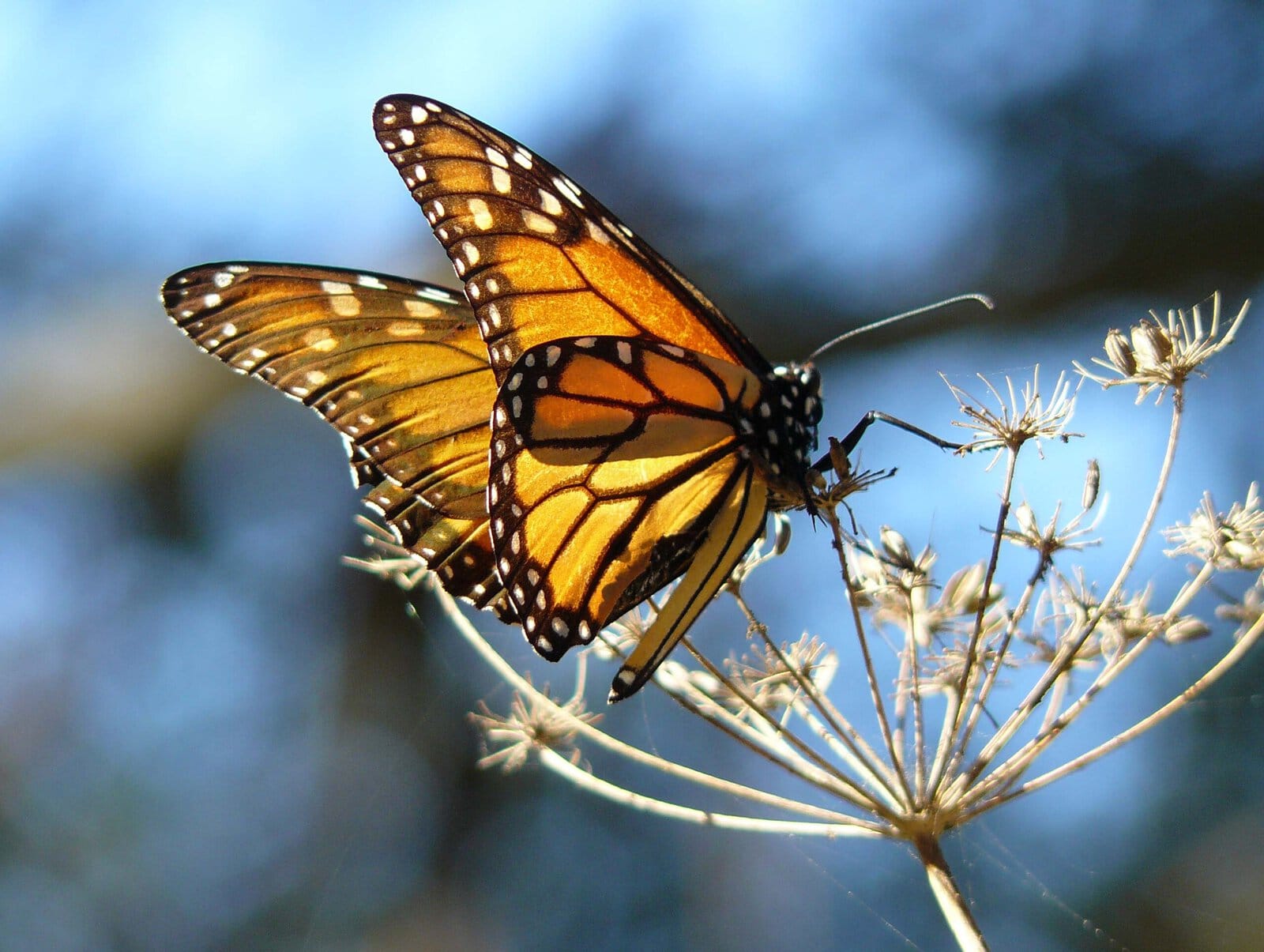
One early Sunday morning, while waiting for the traffic lights to change, I was captivated and spellbound by a few monarch butterflies dancing high above me in the open space of the quiet intersection. I paused for a few moments to enjoy that rare sight.
It was a rare sight because the monarch butterfly[1] is an endangered species. Their young (or caterpillars) feed on milkweed leaves. A variety of wildflowers provide nectar for them as they migrate south to their winter habitat in Mexico[2] and California. But their survival is threatened because of at least three reasons.
First, there is a loss of their food sources due to pesticide use, urbanization, and drought. Second, their winter habitats in Mexico and California are being threatened by deforestation and land degradation. Third, extreme weather conditions (or the effects of climate change) kill them. They are dependent on the actions of human beings to protect them from any drastic decrease in population and even extinction.
At the same time, we depend on them and other pollinators to enable all plants to flourish and to provide us with food. In other words, human beings and insect pollinators are interdependent on one another while we live together on planet earth. The work of pollinators demonstrates God’s care and provision for all creation through creaturely interdependence within the web of life.
Even though it is for just a short period of time, the beauty of the monarch butterfly brings us great joy. Its short-lived splendour (the longest time it can live is less than a year), however, is but a shadow of the beauty of God’s majesty and holiness. Its beauty also points to the magnificent creative power of the triune God who brought all of creation into being out of nothing (Psalm 104:24; Colossians 1:16₋₋17). Thus, in its unique way, the monarch butterfly glorifies its Maker like the mountains and the hills which “burst into song” of praise and the trees which “clap their hands” (Isaiah 55:12) as they joyfully respond to the Lord of all creation. Here, God’s “two books,” the book of nature or creation and the book of Scripture reveal coherently the character of God, specifically the holiness and majesty of Christ (the incarnate God).
The annual flights of enormous groups of monarch butterflies flying to their winter homes may be viewed as a celebration of praise to their Creator who adorns them with the vibrant colours of orange, black, and white. The monarch butterflies in flight are a marvelous sight to behold. They reflect the beauty and splendour of God and inspire us “to gaze upon the beauty of the LORD” and to seek God’s face (Psalm 27:4, 8). In their creaturely way of glorifying their Maker, they urge us to “ascribe to the LORD the glory due to his name” and to “worship the LORD in the splendour of holiness” (Psalm 29:2).
As we raise our voices in songs of praise and hope in the midst of the degradation of the earth, we echo these words of the psalmist:
The LORD reigns.
He is robed in majesty. (Psalm 93:1)
Let the heavens be glad, and let the earth rejoice;
Let the sea roar, and all that fills it.
Let the field exult, and everything in it!
Then shall all the trees of the forest
sing for joy before the LORD (Psalm 96: 11₋₋13).
[1] The amazing “kingdom” and migratory patterns through two or three countries are summarized in this article.
[2]Listen to an interview with Greg Mitchell, a research scientist at Environment and Climate Change Canada, regarding a recent study to follow the migratory route of monarch butterflies to Mexico.
Image by Joyce Cory, CC BY 2.0, https://commons.wikimedia.org/w/index.php?curid=9793546