Small Systems are Important for Fish Too
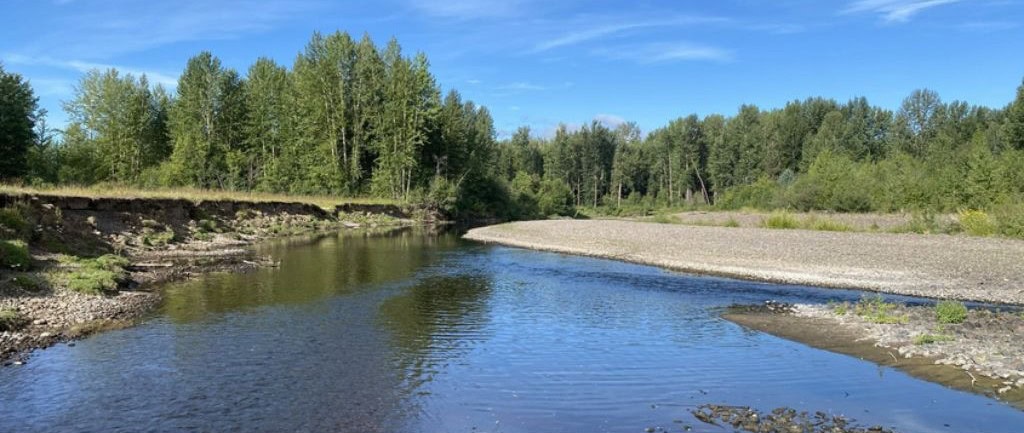
Brianne Hull, Conservation Field Technician, Northern BC team, shares her thoughts on a summer spent in the Little Bulkley and Buck Creek system.
September 4, 2026
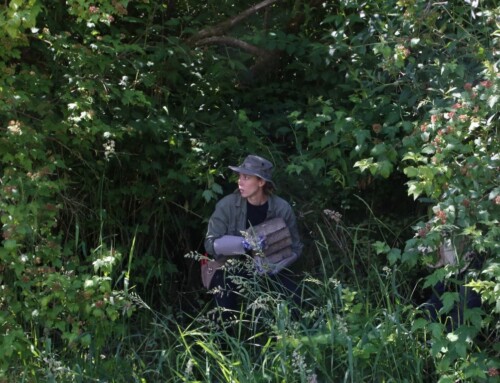
This past summer I worked at the Buck Creek Hatchery and Nature Center as a Conservation Field Technician alongside Marjorie Lieuwen. I graduated with a Bachelor’s of Biology this spring and have previous experience on the Bulkley and Dean Rivers. I am applying my education and field experience to share concerns and opportunities regarding fisheries monitoring, habitat, and management in the smaller Upper Bulkley tributaries.
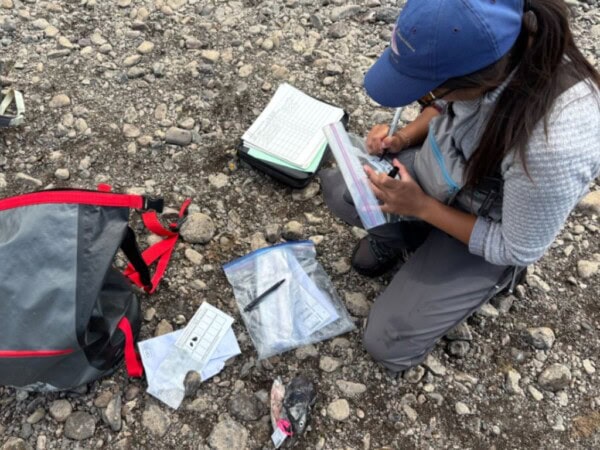
Working on the Little Bulkley and Buck Creek systems showed me how small and sensitive they are compared with the larger Bulkley and Dean Rivers. Their importance can be easy to overlook, but conducting fry salvage has demonstrated how many fish rely on these systems. We saved around 700 fry, mostly coho, rainbow trout, and suckers, along with some chinook. This demonstrates that these tributaries provide productive habitat and contribute to the larger Bulkley system. 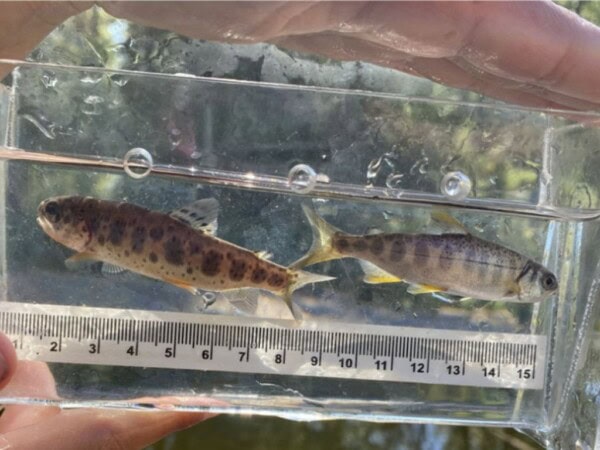
One major concern is the lack of fisheries information available for these systems. Chinook dead-pitch surveys provide an opportunity to document carcasses, spawners, and distribution and better understand what reaches these upper areas. Of 49 Chinook carcasses where sex could be identified, 38 were pre-spawn females and only 11 were pre-spawn males. This raises concerns about why so many females are dying before spawning.
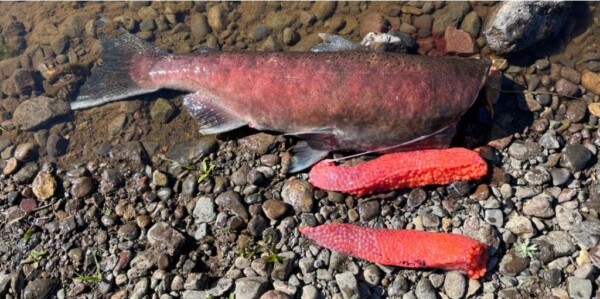
Water temperature may be one factor. Average temperatures have been around 17.5°C, while ideal Chinook spawning temperatures are generally approximately 5.6–12.8°C (University of Washington, 2025). Further investigation could determine whether elevated temperatures contribute to pre-spawn mortality, particularly in females, alongside flow, disease, predation, migration stress, or habitat limitations.
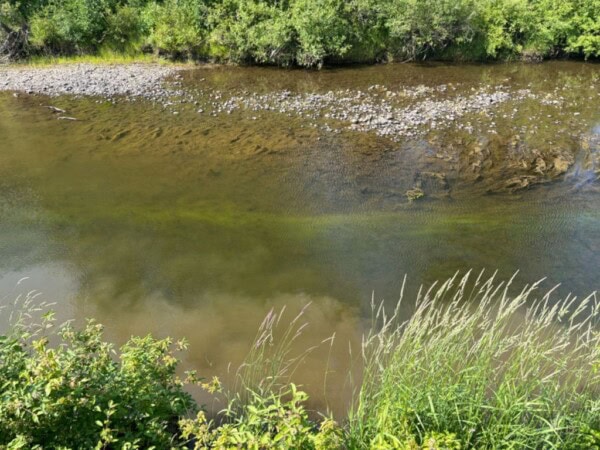
The storm drainage system near 6th Street also deserves investigation. It appears to contribute substantial sediment to the Little Bulkley, with potential pollutants and downstream effects on temperature. Consistently recording spawning locations and revisiting them annually could establish baseline data on habitat use, fish numbers, and productivity.
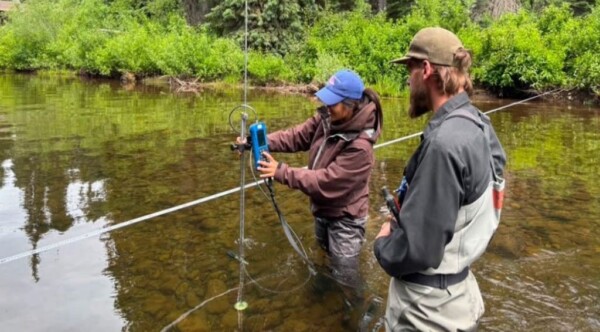
Hydrometric monitoring is another opportunity. We have learned to measure stream flow, select monitoring locations, and understand the value of hydrometric stations. Long-term flow data could help explain how these systems respond to changing conditions and how this affects fish movement and habitat.
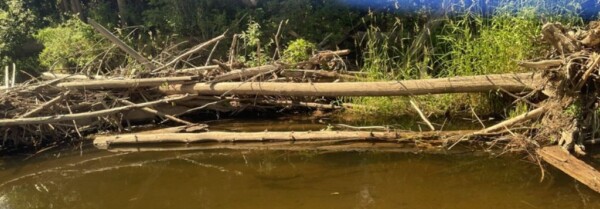
Beaver activity is another consideration. Beaver dams can create excellent spawning and holding habitat by slowing water and creating deeper pools, but some can impede fish movement or trap fish in unsuitable habitat. We regularly open approximately five dams, although there are likely many more. Mapping and assessing dams could identify beneficial dams, barriers, and appropriate locations for intervention.
One Little Bulkley dam held considerable numbers of spawning chinook below it. Before opening it, dissolved oxygen (DO) was 7.92 mg/L and 79.3% saturation downstream; afterward, it increased to 9.41 mg/L and 107%. A 2005 study found no impairment to rearing salmonids when DO averaged 9 mg/L, while 6.5 mg/L produced oxygen distress and 4 mg/L affected a large portion of species (Carter, 2005). Our main spawning-adult holding pool has shown DO ranging from 8.1 mg/L and 90% saturation to 6.3 mg/L and 70.2%, warranting further monitoring.
Stream-bank habitat and temperature are also concerns. Many sections have little shade or overhead cover, partly because the railway follows much of the system. Restoration using willow and other native shrubs could provide shade, moderate temperatures, stabilize banks, and improve fish cover.
The railway also raises questions about repeated train noise and vibration. McCumber (n.d.) reported reduced egg viability under constant 105–120 dB exposure, while Blom et al. (2024) found continuous noise reduced goby brood size, brood area, and yolk sac size, with females sometimes refusing to spawn. I am not claiming trains cause mortality, but I have observed steelhead behaving unusually and aggressively when trains pass. Further research could determine whether repeated disturbance affects behaviour, spawning, redds, or egg survival.
Human activity is another concern. We have observed swimming, dogs playing fetch in holding pools, and fishing near spawning areas. Better awareness and strategically placed signage, including no-fishing signs in sensitive areas, could reduce impacts while allowing people to enjoy these systems.
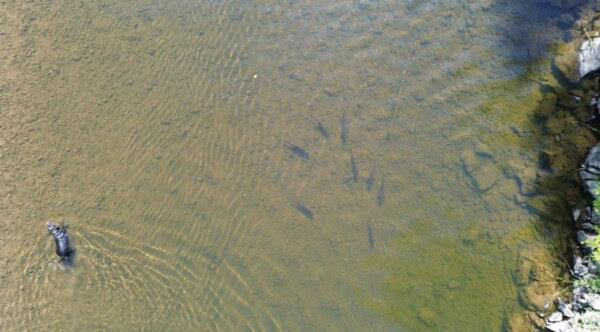
Finally, I believe the Little Bulkley and Buck Creek deserve greater attention regardless of whether they support a recreational fishery. Fish depend on these areas for spawning, rearing, holding, and migration. A carefully designed Chinook hatchery or enhancement program could also be worth investigating. Chinook returns to these upper areas are relatively low compared with the broader Skeena region, and survival to spawning can be challenging. Enhancement could potentially increase production while natural habitat is studied and protected.
The Little Bulkley and Buck Creek may be small systems, but they are not unimportant. Every fish matters in a system this size. As headwaters of the larger Bulkley system, protecting and understanding these tributaries is essential to maintaining a healthy downstream watershed.
References
Blom, E., Dekhla, I. K., Bertram, M. G., Manera, J. L., Kvarnemo, C., & Svensson, O. (2024). Anthropogenic noise disrupts early-life development in a fish with parental care. Science of the Total Environment, 935: 173055. https://doi.org/10.1016/j.scitotenv.2024.173055
Carter, K. (2005). The Effects of Dissolved Oxygen on Steelhead Trout, Coho Salmon, and Chinook Salmon Biology and Function by Life Stage. California Regional Water Quality Control Board North Coast Region. https://www.noaa.gov/sites/default/files/legacy/document/2020/Oct/07354626738.pdf
McCumber, D. (n.d.). Rail Noise and Vibration Impact on Aquarium Sea-Life. Howe Gastmeier Chapnik | Noise Vibration Acoustics. https://acoustical-consultants.com/built-environment/rail-noise-and-vibration-impact-on-aquarium-sea-life/
University of Washington. (2025). Temperature Thresholds by Species and Life Stage. Columbia Basin Research. https://www.cbr.washington.edu/shiny/salmon-stream-temperature/salmon_temperature_thresholds_and_life_stage_dates_documentation_final_250324.pdf