Restoration for the Land and the Soul
By Andrew Housh, Conservation and Restoration Technician
August 7, 2026
My name is Andrew Housh, and I had the opportunity to spend this summer working at the A Rocha Ontario Centre as a Conservation & Restoration Technician. My job consisted of bird surveying, observing breeding behaviour of threatened bird species, removing invasive plants, planting native trees and flowers, nest box monitoring (including taking pictures of baby birds), and much more. Throughout my time here, I found myself reflecting on experiences and lessons every day, connecting my physical work on the landscape with the spiritual work God was doing in me and in the world.
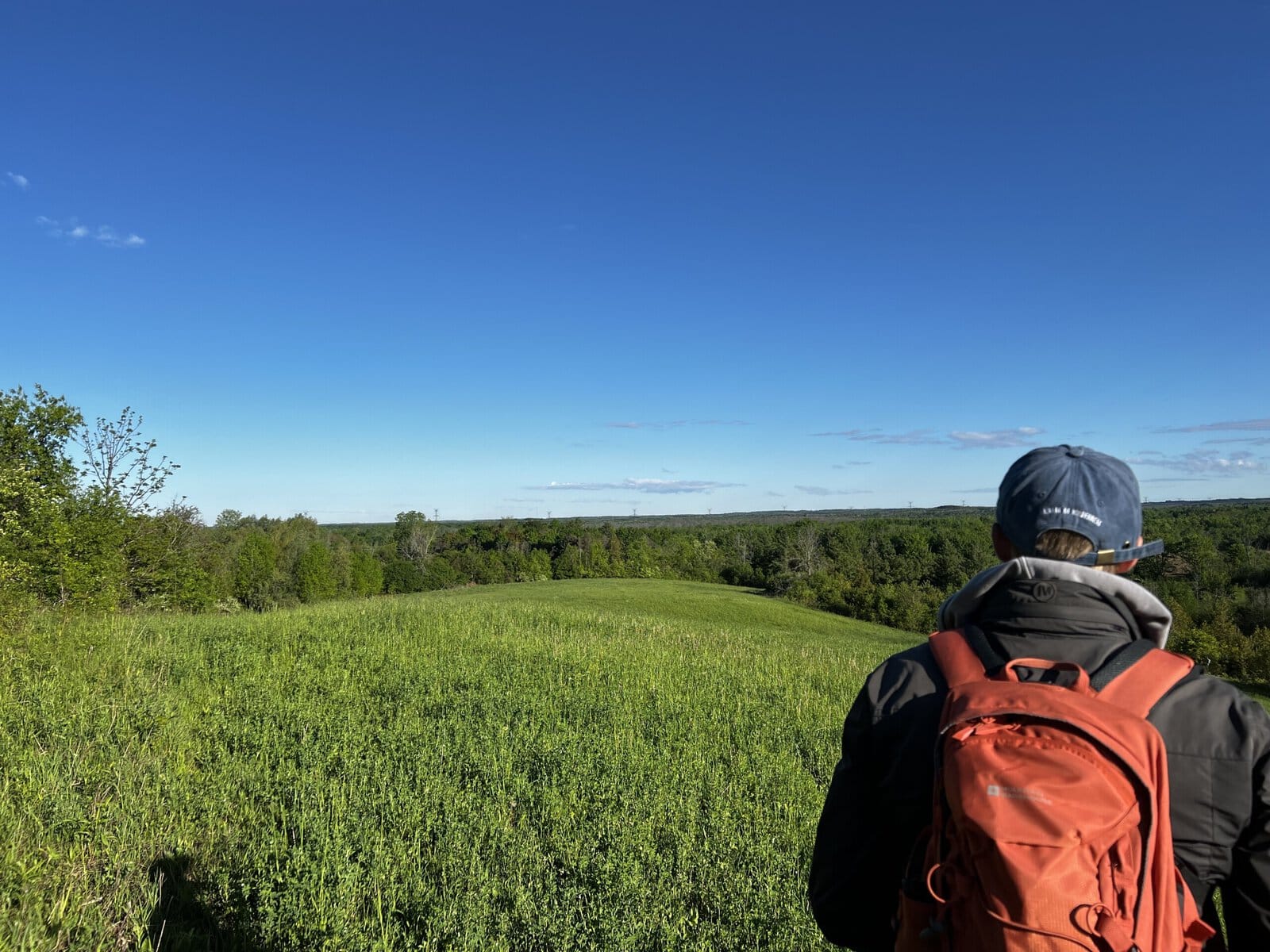
As I began my time at A Rocha and spent full days outside, I gradually learned to slow down, to notice, to take in the beauty, complexity, and intricate design of what was around me. I learned to allow moments of appreciation and wonder. Within a few days, I began to experience something that I don’t think I ever had before: a sense of deep connection with creation. And it began to shape me, my relationship with nature, and the One who designed it.
Psalm 23:1-3a
The LORD is my shepherd; I shall not want.
He makes me lie down in green pastures.
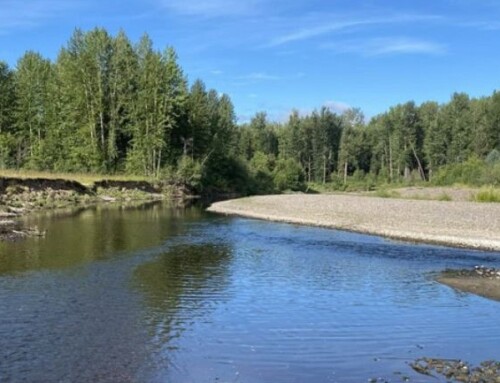
He leads me beside still waters.
He restores my soul.
I’ve read and recited Psalm 23 more times than I can count, but I had never noticed how the scene of pastures and waters seems to connect with the idea of soul restoration. Although there’s a sense in which the grass and ponds communicate provision, David doesn’t write “He restores my body”. It is right after painting this peaceful picture that he chooses to write “He restores my soul”. There is a deeper work that goes beyond provision, and that is the healing and renewal of the soul. I have found this to be true in my own experience this summer. The stillness and wonder of nature has had a powerful yet subtle way of grounding me and preparing my soul to meet with God. Creation is a display of “His eternal power and divine nature” (Rom. 1:20). By being immersed in that display, I found myself looking around in awe, appreciation, and even beginning to feel a sense of peace. Nature helps bring us back, to return to the present moment and what’s in front of us. God is the one who does the healing, but I believe creation has an important part in preparing us to receive it.
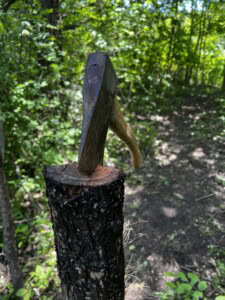
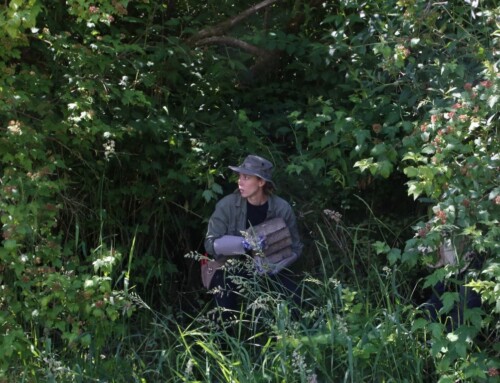
Throughout this term, I spent a lot of time removing invasive plants by pulling shoots, cutting down trees, and spading reeds. As I learned to identify invasive species like Buckthorn and Phragmites, I started to notice them everywhere. All over the property. On the side of the road. On walking trails. Everywhere. We removed thousands of invasive plants and planted hundreds of native plants around the property. But we barely put a dent in the work still to be done.
Although environmental restoration can be overwhelming and discouraging sometimes, the work is not about seeing instant results (as I’ve gotten so used to in today’s world). Restoration work is inherently gradual. But aren’t most meaningful things in life? Relationships of all kinds–including ecological ones–are complicated and take continual work. If left unattended, good things in the landscape can become overtaken by invasives and weeds. This principle applies to our personal lives and relationships as well. Good things like enjoyment and appreciation for life can be overtaken and outcompeted by bitterness and pride. These “invasives” take space away from other important things and prevent natural flourishing. And they don’t go away on their own.
The n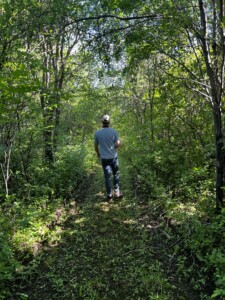 eed for constant management and restoration work is not easy to accept, but it’s necessary in order to move towards a healthy environment.This is the call of responsible stewardship. It’s easy to overlook seemingly small or unimportant areas that need tender care and get caught up in the overwhelming idea of caring for something so complex. The truth is, we can’t tackle every square foot of nature or every area in our lives or relationships at once, but we can start with something small and manageable. We have the opportunity to partner with God in stewarding both creation and our lives. The Lord is intimately involved in this kind of work and is ultimately in control of it, but we are responsible for doing our part. After all, a “partnership” without our “part” is just a “nership” and I don’t think anybody wants that.
To sum up these reflections, I’ve learned that God not only meets our needs, but provides us with a place for our souls to experience His restoration. Creation has a role in preparing us to receive it, but God is the one working deep within us. After taking part in landscape restoration, I find myself reflecting on the hard, constant effort of invasive removal and cultivating natural growth. I am beginning to see how fostering ecological flourishing can teach us how to care for our relationships and personal lives as well. Although stewardship can be overwhelming, we can remember that God is in control and is willing to partner with us in working towards environmental, relational, and personal wellbeing. Restoration is a miraculous gift that God provides for our souls, but it’s also something we can partner with Him to cultivate in the world.
I would encourage anyone reading this (and thank you for reading to the end) to go out to a place you find restful – maybe that’s by a stream or lying down on some grass – and allow yourself to slow down and pay attention. You might be surprised what lessons God has been waiting to teach you. You may even experience His work of restoration in your soul. I’m willing to bet you won’t be disappointed.