Finding the California Spreadwing in Metro Vancouver
How getting to know damselflies and dragonflies of the Tatalu Watershed led to broader scientific discovery for the region
By Steven Esau, Water Quality Technician
May 13, 2026
Dragonflies (and their lesser-known relatives, damselflies) are incredible insects, and well worth the study of any observer who sees them on the wing. Their bright colors and marvelous feats of flight dazzle us as they utilize their four independently-moving wings to hover or chase, accelerating with astonishing rapidity. Theirs is an aerial world, in which they need excellent vision and reflexes to stay aware of prey or predators on the wing, not to mention other dragonflies in their territory. But they are equally aquatic creatures: the larvae (also called nymphs or naiads) live in freshwater, and may take years to develop before they are ready to crawl out of the water to metamorphose into an adult.
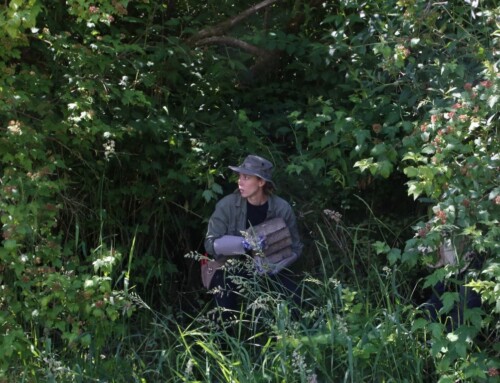
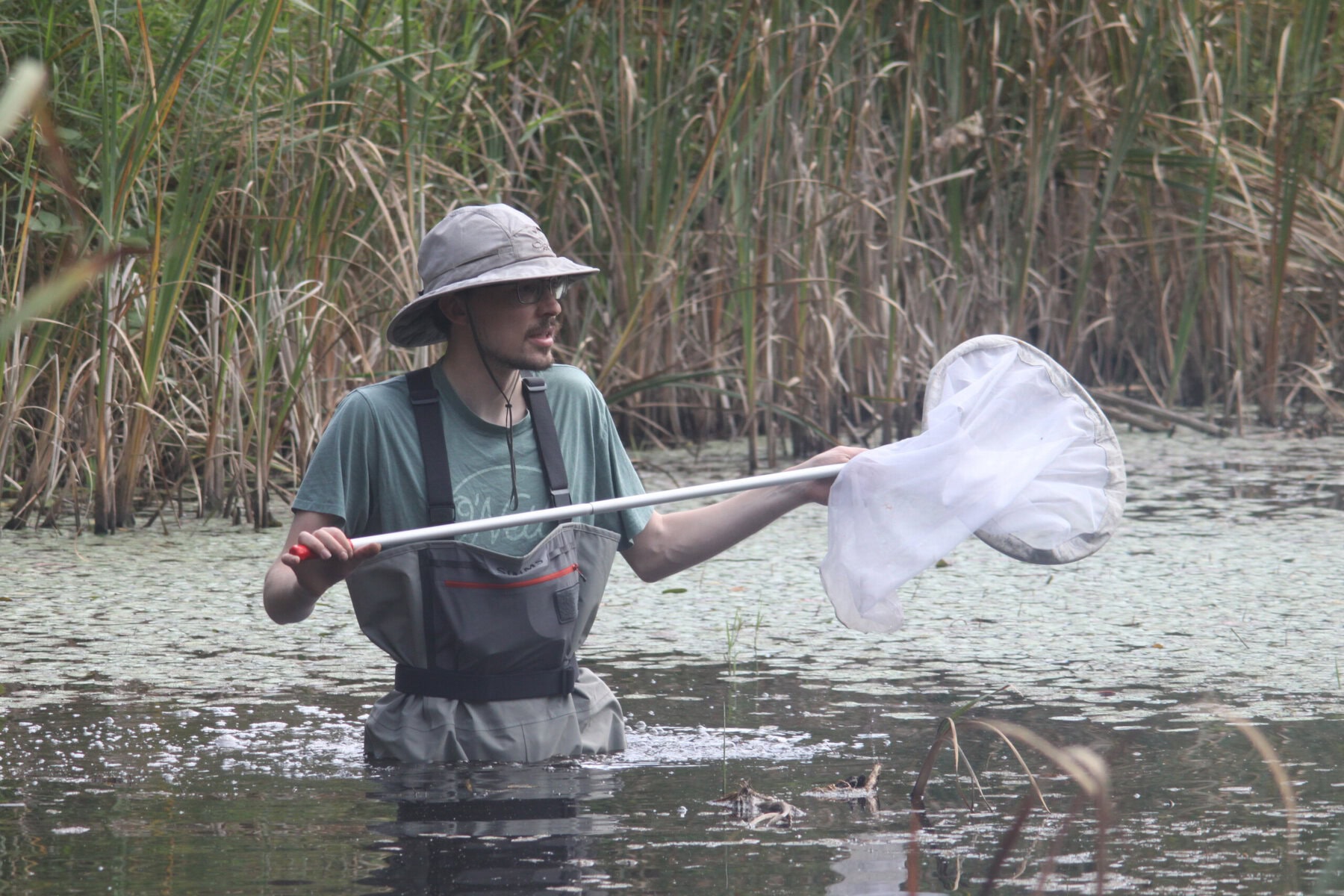
In 2025 I set out to get to know the dragonflies and damselflies of A Rocha’s BC Centre, inspired by some notes left by late A Rocha volunteer and talented naturalist Stan Olson. These insects, which together make up the order Odonata, are well-suited for amateur study. They are conspicuous, colorful, and relatively easy to identify in the field or from photographs. So, equipped with Stan’s old field guides and a thrift store macro lens from the 1980s, I spent sunny afternoons by the pond, peering among the cattails. This time brought me many personal discoveries, but also, surprisingly, a discovery of broader scientific interest as well. I noticed a damselfly that I had not seen before and took a photograph; it turned out to be a California Spreadwing (Archilestes californicus), the first of its kind ever documented in Canada west of the Cascade range, providing evidence of its continued range expansion northward. The ensuing months had me corresponding with experts, mapping species records, and finally co-authoring and submitting a paper to the Entomological Society of BC (read the preprint here). The project proved to be a successful example of citizen science), in which data collected by ordinary people is used for scientific research. Ideally this provides researchers with a breadth of data that exceeds what they could ever collect on their own, while the citizen scientist gets to do something that they find intrinsically rewarding (like photograph dragonflies). At its best, it can lead not only to important scientific discoveries but also to a greater appreciation of the topic in the general public.
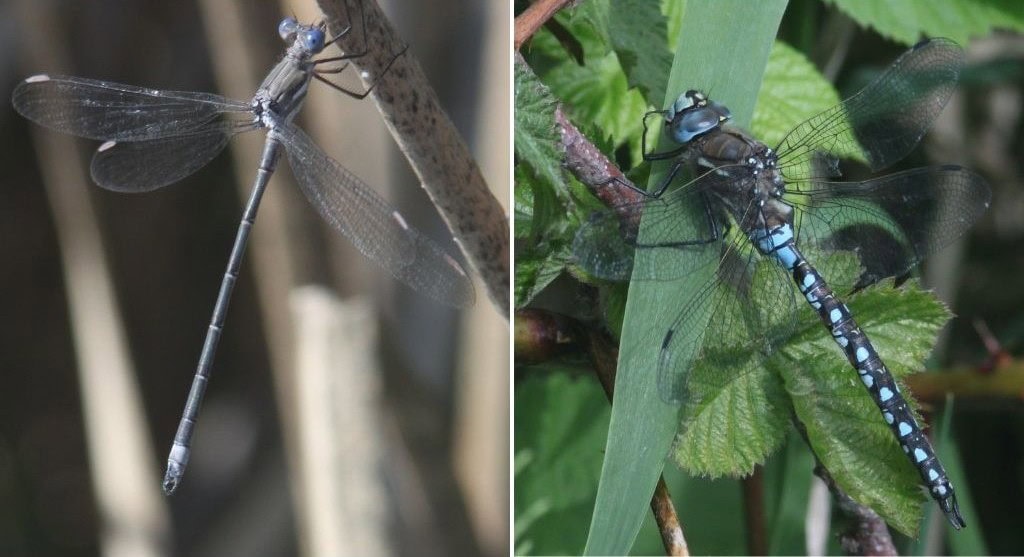
The California Spreadwing (left) and the California Darner (right). Compared to a dragonfly, a damselfly tends to be a slower flyer with a thinner body, dumbbell-shaped head and widely separated eyes.
After I first uploaded my California Spreadwing photos onto iNaturalist and learned what it was, I became curious- where had these damselfies come from? What might their arrival mean for our pond, and for others like it across southern BC? I found an article reporting the first Canadian sightings of the species in the Okanagan Valley in 2016. I wondered if the article’s lead author, Dr. Rob Cannings, might be interested in hearing about their appearance in another part of BC. Rob is curator emeritus of entomology for the Royal BC Museum and a familiar name among BC’s naturalist community- he also authored the field guide I was using. After some encouragement from A Rocha board member and entomologist Dr. Dezene Huber, I took the plunge and reached out to Rob, who quickly agreed to help and started guiding me through the process of producing a follow-up paper. Reaching out to experts takes some discernment, and I felt pulled between my own excitement about the topic, respect for others’ time, and doubt about what I could offer. Thankfully Rob, Dezene, and the other entomologists I contacted were all incredibly gracious, responding with interest and invitation.
Citizen science is inherently collaborative, and revolves around the relationships between people who may have very different expertise and life experience. While working on our paper about the California Spreadwing, I got to see this from multiple perspectives. One idea we had was to map all of the known records of the species in the Pacific Northwest, to visualize how its range has expanded. I gathered data from citizen science portals, scientific publications, museum collections, and personal notes shared with us by odonatologists. I was struck by the strong potential for ordinary people to fill in a hole or create a new salient in our map, contributing to our understanding of this species. In the world of insects, a keen observer has good odds of eventually seeing something that has never been documented before: a new location, behavior, or interaction. However, putting those discoveries into context requires time and expertise. iNaturalist has a low barrier to entry and a large user base in recent years, which led to a solid documentation of the California Spreadwing’s movement up the coast of Washington. But this was complemented by records connected to publications like “Dragonflies of Washington” or student’s graduate theses, which were taken by a smaller but more systematic group of searchers. The finished map is the collective work of many different groups and individuals, which all together tells a compelling story about the species’ history.
A Rocha’s field stations welcome many guests of all sorts, and invite people to look more closely at the world around them. We believe this attentiveness is valuable in its own right; among all the things competing for our attention our fellow-creatures are worth focusing on. But it can also lead to discoveries that have practical importance, such as a new species showing up in the pond. And if you are interested in learning more about insects, I would suggest that dragonflies and damselflies are not a bad place to start.
Feeling inspired by Steven’s damselfly discovery and keen to get involved in citizen science? Find out more here.