On Behalf of the Land
Standing in the gap for people and place
By Madi Headley, Communications & Storytelling Assistant
September 5, 2026
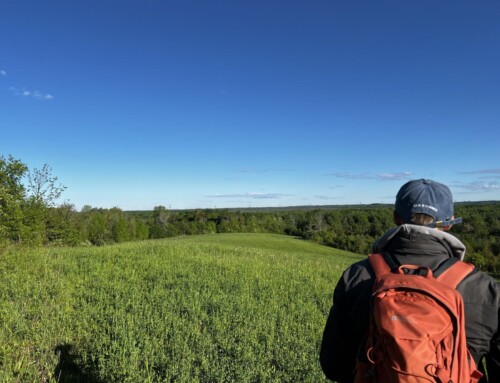
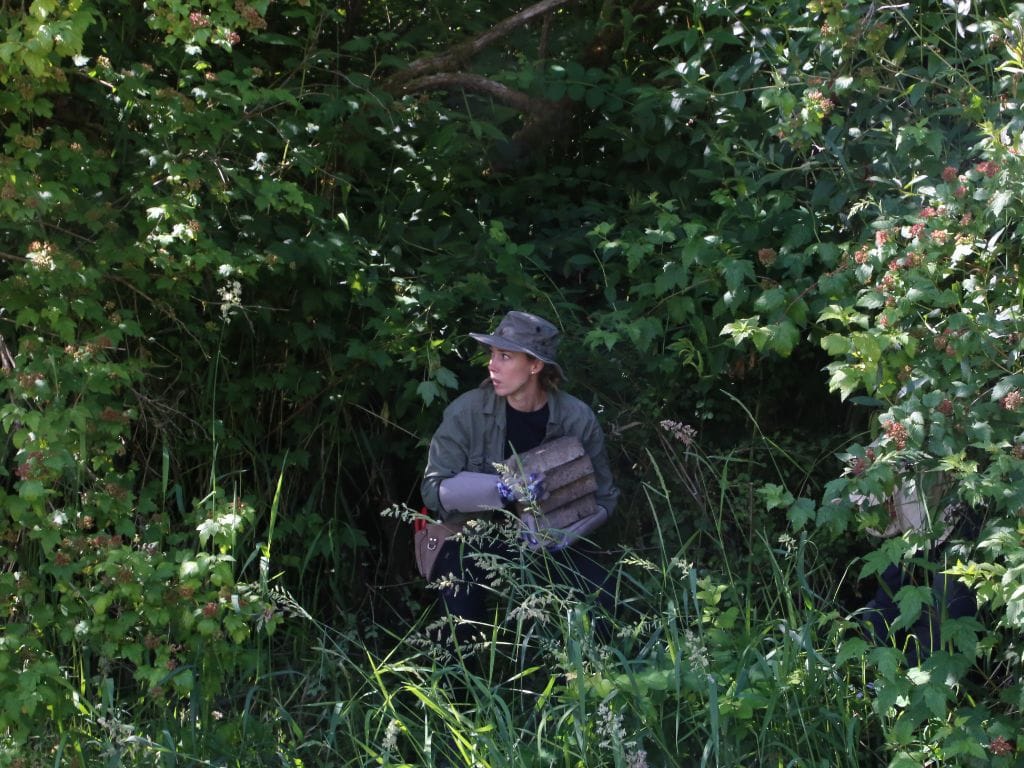
Along the back half of a well-tended swath of farmland, the Tatalu (Little Campbell River) meanders through the ardent green of a privately-owned property. In the dusty brush by the river, many hands moved to pass bricks through a gap in the green. The mid-June sun baptized us in sweat as seven members of the BC Conservation Science team brought equipment down the path, from the trucks to the clearing above the bank, where metres upon metres of invasive canary grass had been tamped down.
This transportation of materials was part of a multi-step process to restore the riparian area adjacent to the Tatalu, led by Laura Tsai, Restoration Biologist with the BC Environmental Centre, in partnership with World Wildlife Foundation (WWF). Derived from the Latin word ripa, meaning riverbank, a ‘riparian buffer’ describes the lush transition zone where the land meets the water of a stream, river, wetland, or ocean. Healthy riparian zones are tremendously diverse, creating safe habitats for a variety of wildlife, filtering toxins from the river, and preventing erosion of the banks by the deep and extensive root structures of native plants.
It is difficult to observe this scene and not be reminded that the repeated image in scripture used to describe the people of God—diverse in expression, unified in purpose, and inextricably interconnected—is a riparian zone. The prophet Jeremiah says of the people: They will be like a tree planted by the water that sends out its roots by the stream (Jeremiah 17:8a).
However, for many years, the riparian buffer of the Tatalu has been inundated by reed canary grass (Phalaris arundinaceae), an invasive species which was introduced to the Lower Mainland as cattle feed and quickly spread.
The presence of reed canary grass creates a monoculture in the riparian zone that outcompetes the diverse and beneficial native plants. This restoration project requires the complete removal of reed canary grass and the eventual introduction of native vegetation species, to restore the symbiotic balance of the river ecosystem.
Our own culture is a monocrop of sorts—obsessed with individuality, wary of mutual dependence, and woefully disconnected from the land and one other. We are not the first society to experience this. As another prophet, Ezekiel, chronicles: I looked for someone among them who would build up the wall and stand before me in the gap on behalf of the land (Ezekiel 22:30). He urges the people to work together, to fight for justice for the land and the vulnerable, and to bring healing to a world that is hurting.
The biblical metaphor takes on new meaning when I see for myself the work it takes to repair the riparian buffer of a river. The team laid out heavy tarps and set the bricks to keep them in place. They toiled to hammer metal stakes to prevent any grass from escaping the tarp barrier, to limit the growth of the weed. They stood in the gaps along the river, knowing their work was making a way for healthy species to be introduced; for the riverbank to be restored to flourishing.
Ezekiel goes on to describe a restored society with language that reflects a healed riparian zone. Fruit trees of all kinds will grow on both banks of the river … because the water from the sanctuary flows to them. Their fruit will serve for food and their leaves for healing (Ezekiel 47:12).
Healthy societies are marked by diversity and interdependence, safe places and deep roots. This kind of culture takes time and effort to build. It requires sweat and toil and an enduring belief that the small moments are significant when it comes to changing the world—that a few bricks matter, that a few metres make a difference.
There are many watersheds that need saving and many metres of the Tatalu that are affected by reed canary grass. But there are also many hands, moving together to restore, build up, and renew the riverbank. There are many choices being made to put things to rights, to stand in the gap, to set bricks in the dirt, one by one.
At this particular bend of river, on this small corner of riparian property, within this singular watershed, many people have arrived to pour out as the river does—ever giving, ever filled, ever moving to the gaps—as both love and water are wont to do. Everything is green and healing is surely falling in this place, like leaves of trees upon the waters of the Tatalu.
Photos by Madi Headley.
This project is made possible by funding from World Wildlife Foundation (WWF). This is the second year that we have partnered with WWF doing riparian restoration on farmland. Click here to learn more about the details of this project.
To book a property consultation, contact the conservation team at conservation@arocha.ca