There’s been a lot of discussion lately about the Northern Gateway Pipeline, the controversial pipeline proposal that is planned for northern BC. It will pass through mountain ranges, across salmon rivers, and through the territories of a number of First Nation groups. There has been a lot of pushback against the proposal from many groups, including churches and ecumenical groups. I have my thoughts on this issue, and I thought I would share them with you here.
We Are All Part of the Problem
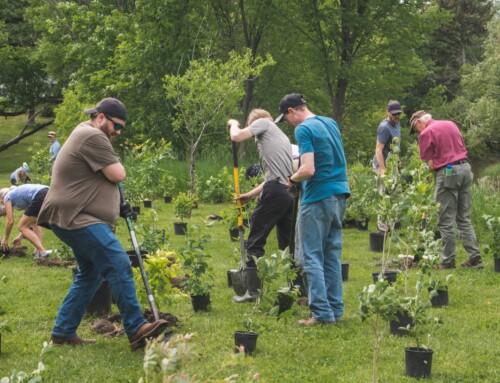
This morning I made a delivery for the native plant nursery that I work for. The 400+ plants needed to go about 100 km away. I drove on thousands of acres of paved farmland, along with hundreds of others. Along with me on the road were many trucks, delivering our food, clothing, medicines, and building supplies, all the things that we need to maintain our civilization, in fact, the things that we need to live. So in order to do some good and supply native plants for a planting, I was complicit in the destruction of God’s creation. And there was no choice. How else would you suggest I ship the native plants?
To move all this material, indeed, to support civilization itself, takes energy, enormous amounts of it. Where does this energy come from? It comes from oil, huge amounts of oil, almost 90 million barrels per day worldwide. That’s over 3 billion barrels per year.
Who’s responsible for this? Who relies on this oil? Anyone and everyone in our society. No matter how sustainably you live, no matter how organic or local your diet, how much transit you use, you are dependent on this stream of oil. We are all complicit. “We are all guilty. All have turned away, all have become corrupt; there is no one who does good, not even one.” (Psalm 14:2)
It is acknowledgement of this guilt that I miss from all the pronouncements that have been made against the oil pipeline.
We Live In A Global Village
The other factor that complicates this discussion is that our decision has global consequences. We can’t just say no to the pipeline and pretend that there will not be consequences to people and ecosystems in other parts of the world.
In the last 5 years global consumption of oil has increased by almost 10 million barrels per day. How did this happen during times of enormous financial turmoil, during a 5-year period when the US actually reduced its consumption? It is because millions of people in countries like India and China are moving from poverty to middle class, choosing to live like we do. Since we already live this way, it’s pretty hard for us to argue that they shouldn’t be striving for our lifestyle.
Neither China nor India have very much oil, so they import it. China in particular has been purchasing oil around the world. Some of you may have heard that they have purchased Nexen Energy, a relatively small company in the Alberta Oil Sands. In addition, they are active in Africa, purchasing companies and developing oil fields — this on a continent where environmental legislation is virtually non-existent, where corruption is endemic, and where oil field pollution contaminates entire river deltas. (If you’d like to read more, see the articles on Nigeria and The Amazon, or Poisoned Wells: The Dirty Politics of African Oil by Nicholas Shaxon or Ethical Oil by Ezra Levant.)
Where Now?
So now, with our own hands black with the smear of oil, we have a decision to make. We already have pipelines all over our continent to provide for our own needs. China will have its oil. Will we add one more pipeline and pipe them our oil? Or will we refuse and have them go to another country?
We have relatively strong environmental legislation, a strong history of environmental advocacy, and the capability of responding to spills if and when they happen. In Africa (or for that matter, South America, which has similar issues), none of these strengths exist. We can say yes, knowing that we may cause damage to local ecosystems. Alternatively, we can tell them we value the ecosystems of BC so much that we don’t want to take the risk or make the sacrifice. They will continue to hunt for oil elsewhere and they will find it. Others will take the risk without having the same capacity to respond.
I’m not sure what the correct answer is. I pray God forgives us for what we are doing to His creation, no matter what happens.