Alumni Intern Lanie Fung Introduces A Rocha’s latest Conservation Report
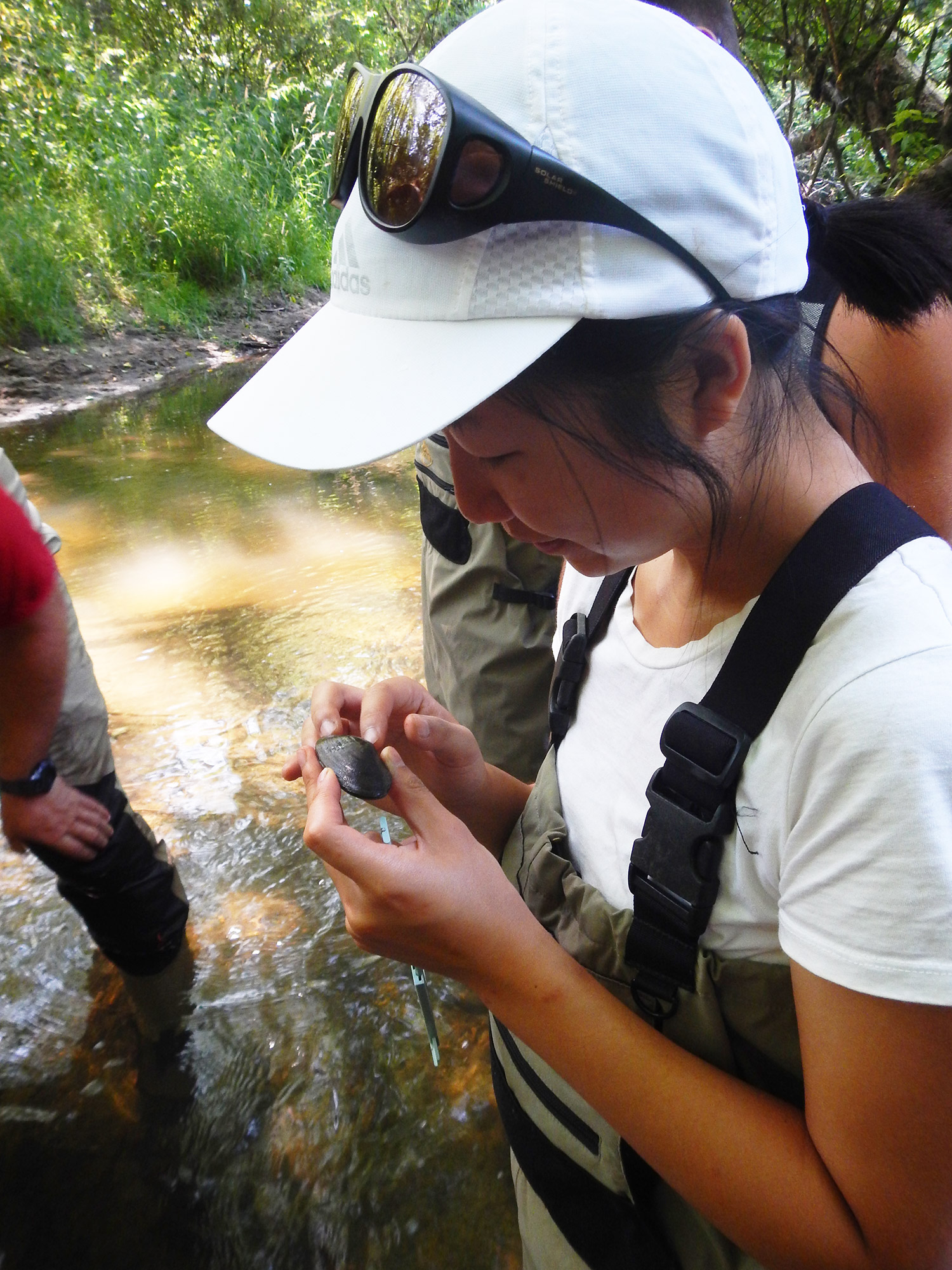
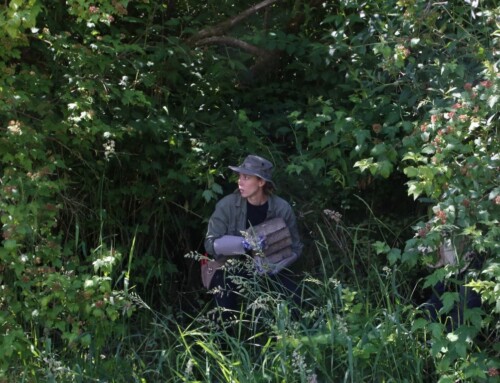
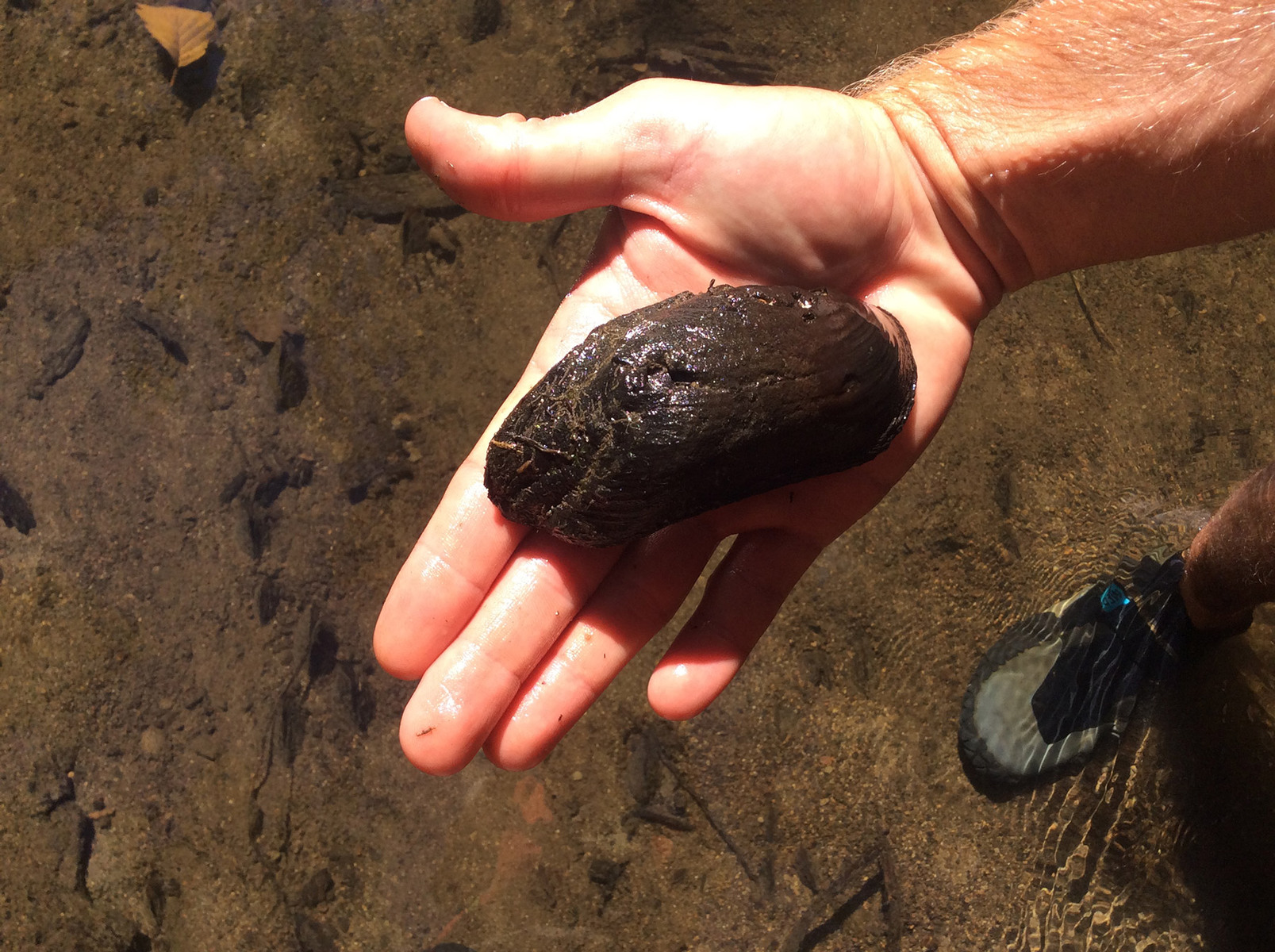
I’m crouching in the middle of the Little Campbell River with my head in a bucket. Believe it or not, this is what conservation science looks like for me. The bucket I’m holding has been modified with a clear plastic bottom so that I can search for a small, well-hidden species that buries most of its body in the rocky streambed. I’m searching for freshwater mussels, and this “bucket-scope” helps make it much easier to see underwater. The most commonly found freshwater mussel in the Little Campbell River is the Western Pearlshell mussel, or Margaritifera falcata. Averaging at around 10 cm in length, it has a dark blue to black elongate shell.
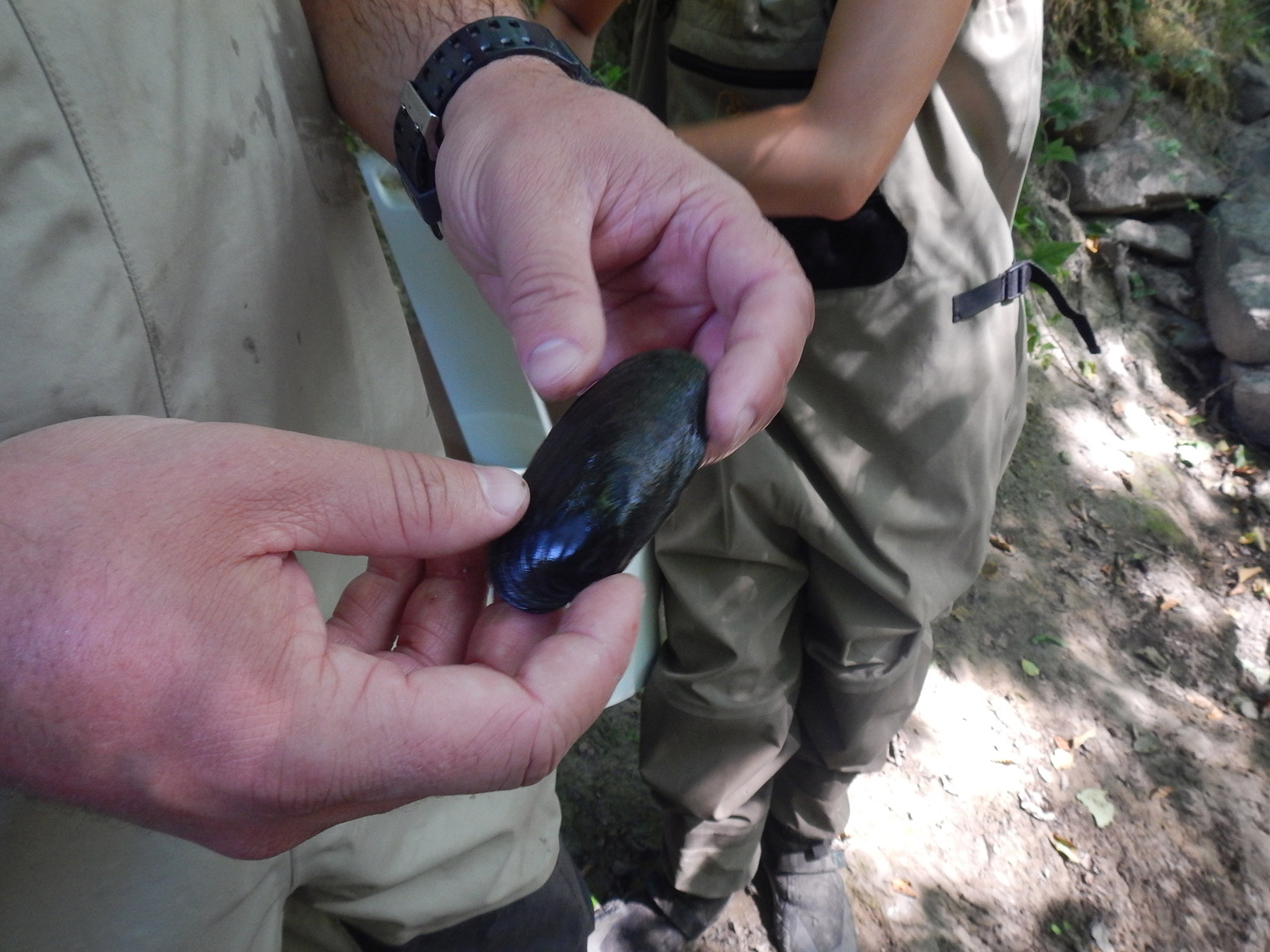
One of the most impressive traits of freshwater mussels is their incredible ability to filter water. A single mussel can filter up to 50 L of water a day. This ability to filter vast amounts of water improves water quality, which is important for all species that live in and rely on the river ecosystem.
Another amazing fact about the Western Pearlshell mussel is that while most live for 60-90 years, some surpass 100 years. Some of the Western Pearlshell mussels in the Little Campbell River are thought to be over 100 years old.
Although freshwater mussels play an integral part in maintaining the health of freshwater ecosystems, and provide important services to many organisms, they have been facing a dramatic decline. In North America, approximately 70% of freshwater mussel species are either extinct or listed as under threat. Continued research and monitoring of freshwater mussels will help us better care for and the improve the survival of freshwater mussels in the Little Campbell River and elsewhere.