The A Rocha team in southern Manitoba recently hosted a “Wild Edibles” afternoon at our Pembina Valley Interpretive Centre, educating participants on the wonderful world of food right under their feet. Though Pembina is a small valley it is home to a third of all the plant species found in the entire province, many of which are nutritious!
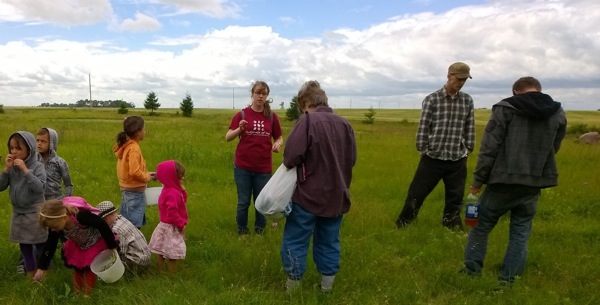
When a family with 6 children arrived and piled out onto the grass laden with shovels, buckets and gloves they were asked what they could eat that was growing right at their feet. After a few timid guesses of “grass?” they were amazed when our summer Environmental Education intern Michelle Elliott told them that young Dandelion and Plantain Leaves could be eaten in a salad, despite typically being seen as weeds.
This kicked off a collaborative adventure walking around our property to the ponds where we sampled some inner Cattail stalk, then over to the native prairie grassland to pick some Wild Bergamot flowers for tea, plus leaves to tuck into pockets in hopes of deterring mosquitos. We then made our way down to our beautiful forest trails.
Several of the visitors were familiar with different plants but were grateful to receive pocket reference guides created by our intern, complete with information and images of 28 commonly found edibles in the valley. While the kids eagerly sought after the tiny and sweet wild strawberries growing along the paths the adults identified trees, leaves, flowers and berries.
Click here to download the Wild Edibles Field Guide
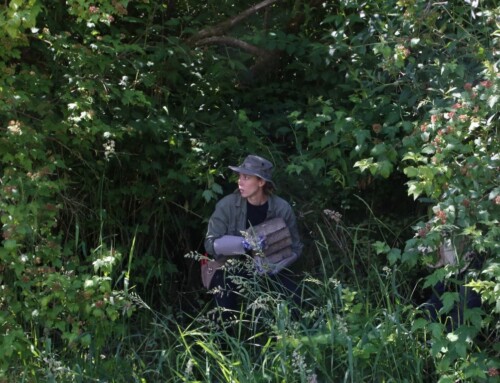
What developed was a sense of camaraderie as staff, volunteers and visitors meandered down to the creek that borders A Rocha’s 100 acre-centre. With mouths still tingling from nibbling on Stinging Nettle (a vitamin-packed plant with a bad rep for causing brief skin irritation on contact unless heated first) the group came to a large plateau near the creek full of Burdock, a wild plant that looks similar to rhubarb, but with infamous prickly burrs on dry mature plants. A Rocha’s Centre Director Henry Martens waded into the bush to pull up several of the plants, unearthing a thick carrot-like root for people to take home to wash and slice and sauté. While the giant Burdock leaves can be cooked or eaten raw when young (albeit tasting bitter), one of the children discovered an alternate use as it started to rain. He plucked one of the giant leaves and held it over his head as a make-shift umbrella. Several others followed suit to avoid getting soggy on the trek back up the hill.
Once there, everyone was rewarded with a “Wild” snack made from the plants they had just learned to identify. First was an iced tea made from boiled Sarsaparilla Root which grows prolifically throughout the valley and was once used to flavour the original Root Beer. The more tame beverages were Hyssop, Mint, or Bergamot teas, plus a Wild Raspberry Leaf Iced Tea complete with berries.
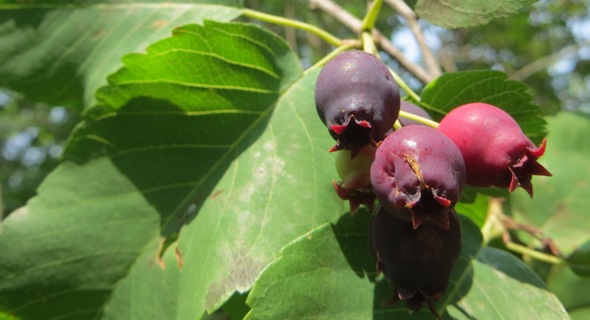
The most time-consuming drink to prepare was a Roasted Dandelion and Burdock Root Coffee which took hours to dig up, wash, chop, roast, grind, and finally brew – only amounting to a single pot of drinkable product. Commenters claimed it to be “pleasant-tasting, but not at all like coffee”. Elma Martens served delicious Saskatoon Berry Bran Muffins, plus tea biscuits and Saskatoon Berry Jam.
Visitors left with smiles and small containers of edibles they had collected, plus the knowledge that if they found themselves hungry in the woods one day they could confidently find something to nibble.
Article by summer Environmental Education intern – Michelle Elliott