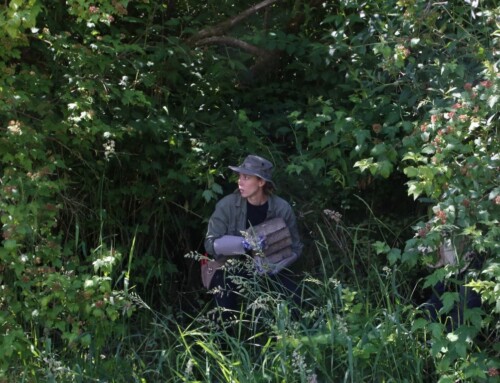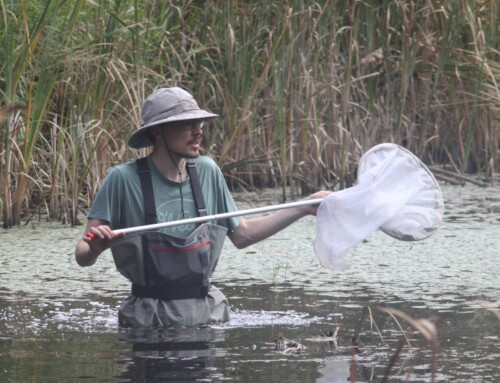
 Over the past few weeks, the A Rocha Conservation Science team has been surveying ponds throughout the Little Campbell River watershed for northern red-legged frog eggs.
Why do we survey for eggs and not the adult frogs themselves? Because the adults quickly dive down into the vegetation and litter at the bottom of the ponds at the first sign of being approached. Their large egg masses, however, are usually at or near the surface of the water, attached to woody debris or aquatic plants. Egg masses are the best indicator of a healthy and reproducing population. Of course, eggs soon hatch into tadpoles, so the window of opportunity for these surveys is short. So, it’s been a flurry of activity lately!
A Rocha team members have been surveying ponds in the area for northern red-legged frogs every spring since 2009. Along with counting egg masses, we have also been collecting habitat and water quality information. The growing dataset has begun to allow us to monitor shifts in the health of the local population of this threatened species.