
Christie Goode
Vice President of Advancement
I’ve heard that the critical factor in being successful in mathematics is not actually a mind for math, but the patience, work ethic and straight-up discipline to do the hard work the math question requires.
Similarly, my observations of A Rocha over the past six months have led me to believe that the critical factor in successful environmental care, is the conviction that nature and people are meant to flourish together. In the Christian worldview, that conviction is based in our belief that nature and people were created to flourish together. That was the intention from the start. Such conviction gives us the patience and work ethic to stay with a challenge until we find a creative solution.
In A Rocha worldwide, we’ve seen this principle at work in every country. In Kenya, for instance, A Rocha helped create an eco-tour program to protect the Arabuko-Sokoke Forest, while also providing income to send local children to school. Local villagers used to cut down the forest to burn and sell charcoal to pay for their children’s school tuition. After significant consultation, A Rocha staff started to train tour guides in rare bird identification. They worked with volunteers and other agencies to build a tree-hide and walkway through mangroves. They marketed to hotels up and down the coast. Now the eco-tour program provides a sustainable income that funds bursaries for local children to attend secondary school – all while improving appreciation of the forest, rather than destroying it.

A Rocha India faced similar dynamics when faced with the problem of elephants encroaching on farmland. When a damaged field can threaten a whole year of food security, impoverished farmers can easily be tempted to kill the elephant. Especially when traditional defenses like rubble walls, trenches and solar-powered electric fencing weren’t working. So A Rocha found another solution: ropes soaked in a mix of oil, chilli and tobacco. The combined smell creates a sensory barrier, so elephants just keep going, and don’t try to pass the rope. It’s remarkably effective. The conviction that there must be a way, led to a creative solution that protects the interests of both the elephant and the farmer.
Here in Canada, we’ve been practicing this principle a lot the past year, as we have faced the challenge of a potential semi truck development right across the road from the Brooksdale Environmental Centre. The proposed development would be on a downstream bank of the Little Campbell River (LCR), and could jeopardize the decades of work that we and others have invested to maintain it as a healthy salmon and trout river. Being as the LCR is one of BC’s most endangered rivers, its banks are not a great location to house hundreds of semi trucks with all their exhaust and fluid changes.
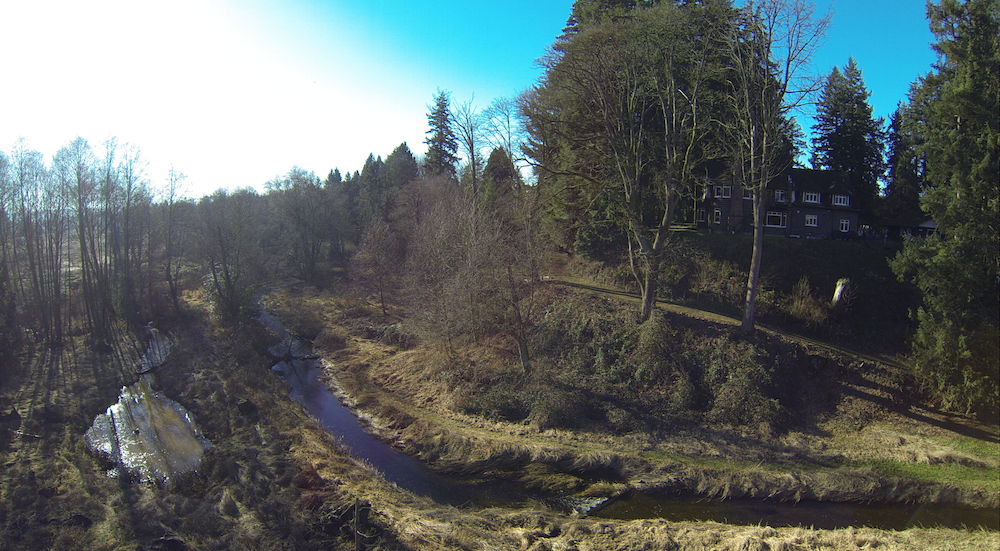
A Rocha’s part in the conversations among landowners and city staff has been to be a “middle voice”, acknowledging the ongoing need to manage land use for a growing population, but with the conviction that we can find a way to do that without threatening the river. This particular man plus nature challenge has not yet been resolved, so stay tuned. A Rocha is privileged to be part of the conversation to find long-term solutions so that people and nature can flourish together.