Wondering While Wandering
Experiencing grace in the wild
By Madi Headley, Communications & Storytelling Assistant
June 25, 2026
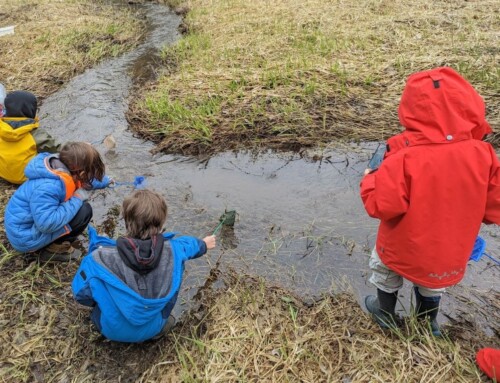
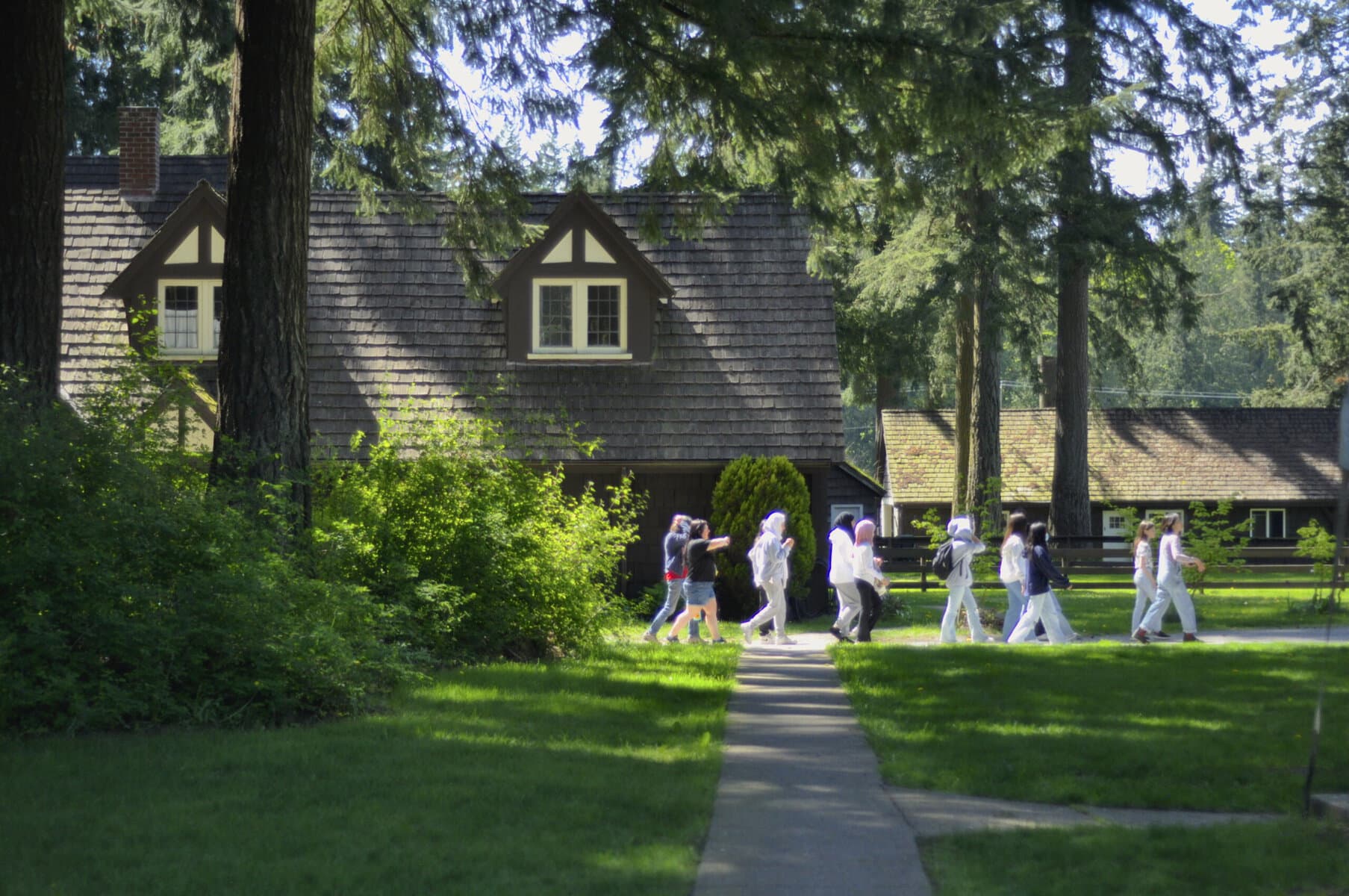
In the stillness of the forest, small hands traced the weathered lines of a red alder’s bark. This was on a forest walk at the BC Environmental Centre, with a group of girls from Gxrls in Action (GIA), a Surrey Schools afterschool program for vulnerable kids. We had begun our tour in the fields and garden, tasting spearmint, apple mint, lemon balm, rosemary sprigs, and bunches of kale, plucked fresh from full rows. Shortly thereafter, we descended along the trail towards the Tatalu (Little Campbell River). No sooner had we begun to follow the path through the woods than the questions began.
What is this flower called? How do you know which tree is which? Why are some species invasive?
The girls inquired about foxgloves, maples, western red cedars, and black cottonwoods. They asked about the varieties of mint we had eaten and what they could be used for. Awed by the salmon fry that seemed, at first, like seaweed stuck to rocks, the girls marvelled aloud at how they stayed in place against the rushing current of the river.
When do the salmon swim upstream? Do you ever fish them out for food?
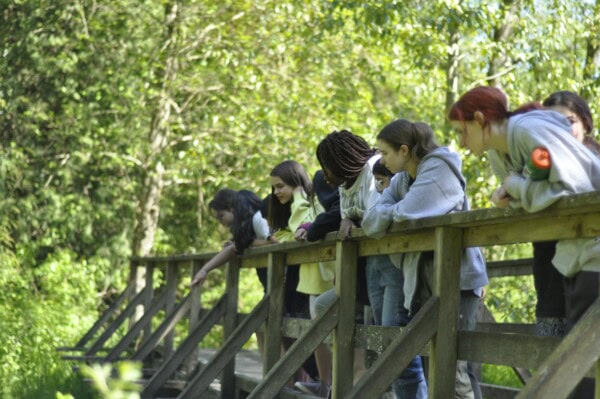
We wondered together how old the grandmother tree, growing to the side of the path, might be, and whether these maples could produce syrup. We discussed sustainable farming practices and whether community is important for human flourishing.
Some questions we had answers to. Others we mulled over, not coming to any one conclusion by the end of our afternoon.
Surely, we could discover the age of the ancient maple on the trail along the Tatalu. But there are other questions that do not have neat or scientific answers. How evil and suffering can exist as they do. How grief must endure so long. How the spring comes again and again, in spite of the long and heavy winter. How grace perseveres so ardently in word and world, in action and red alder. Surely, these are mysteries that we could mull on for a lifetime. Surely, the answers are unknowable in their entirety. Surely, it is worth it to wonder anyway.
So much of life, as humans, requires us to live in tension. We are curious creatures, and asking good questions is one of the great joys of life. But we must become comfortable with not coming to answers in the course of a single afternoon, or perhaps, at all. We must embrace living with uncertainty. We must become aware of the mystery of it all, and learn to rest in it.
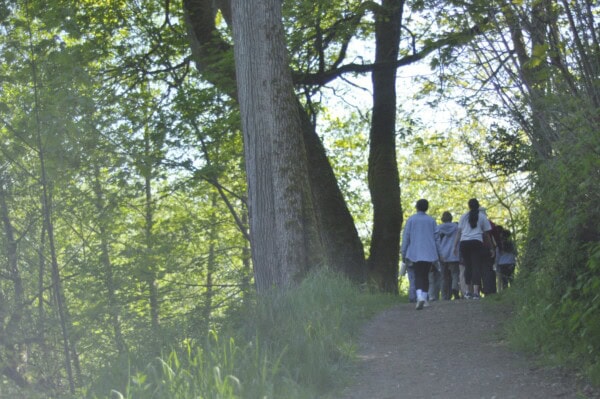
The girls and I stood for a few moments in silence, among the trees. The peace of wild things, as Wendell Berry puts it, descended, and we stared in wonder at the light streaming through the green. A Douglas squirrel scampered up the russet trunk of a cedar, and we could not help but gasp in delight. We stopped to look, really look, and to listen, and were rewarded with manifold birdsong, the river falling over stones, the branches of wind tangling in the trees. We could not help but see that it was precious. We could not help but glory in the gift.
The grace that is given freely in this created world is surely undeniable.
The movement of the river to pour itself out, or the gift of berries to unfurl at the proper time, or the sacrifice of salmon to give its very self for the nourishment of many. The way of the whole world to arrive again and again at the spring, unraveling into an abundance of food, and air, and water, and beauty—all this is an act of grace. Never mind that we could do nothing to earn it. Never mind that we have again and again squandered the gift. The spring has come in fullness and even now is waxing towards the full summer. We are invited to live in unmerited favour. To enjoy mint and lettuce, salmon fry and cedar bark, birdsong and rushing water. To keep it well, and to honour the sacrifice, and to give our own selves in loving response by small and daily acts of love.
Questioning is important work. So too, is paying attention. Both might be called wondering. So, may we be people who wonder at the wild beauty of creation, and in wondering, be moved by the mystery of grace.
Featured photos by Abby Simonin.
The A Rocha Canada Farm to Families (F2F) program has been partnering with local service agencies and organizations such as GIA for more than 15 years. We connect 600+ children, families, and seniors annually to fresh food through hands-on gardening, cooking education, and vegetable donations from our farm. This and other programs wouldn’t be possible without your support. Donate here to keep kids in awe of creation.