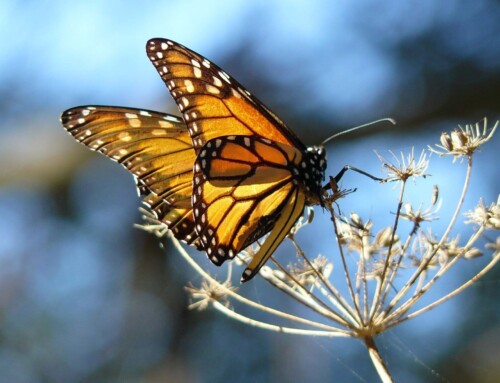
It no longer seems like news to be told that many, many species are extinct or nearly so around the world. Some have called this the “Sixth Extinction” and lay the blame, correctly, at the feet of humans. And while news reports like this seem to have lost their sharp edge, they begin to cut again when they are visualized in a new way.

A few days ago, the Guardian newspaper put out a map of the world showing locations and numbers of species that have gone extinct or that have been red-listed. The map shows 261 extinct and 303 critically endangered species for North America alone. It is important to keep in mind that many species go extinct before they are even recorded by naturalists. So these numbers are a conservative estimate.
Of course, many people might ask why we should be worried about the loss of the Yunnan lake newt or the Xerces blue butterfly when there are people going without food, drinking contaminated water, and dying of diseases all around the world.
In other words, why should we worry about species conservation? Shouldn’t we have other priorities?
One answer to that question is that by protecting the habitats for endangered species we also improve the environment generally for all of the inhabitants of those areas. Inhabitants that include humans and their fellow creatures that they rely on for a livelihood. Many diseases and other issues affecting impoverished nations are brought about by environmental degradation. And poverty increases environmental damage, which in turn increases poverty in an evil positive feedback cycle.
One of our jobs as Christians is to put an end to that cycle. We at A Rocha take that responsibility very seriously.
A second answer to this question is perhaps less obvious but also important. That is, we take care to steward the environment because God loves what He has created and He calls us to do the same.
The Christian Reformed Church in North America recently sponsored a Creation Stewardship Task Force that came out with an extensive report on how Christians ought to care for creation. The entire report (PDF link) is important reading for anyone interested in this topic. One section, however, stood out in highlighting an approach to caring for nature in terms of our love for what God loves:
“We recognize that our efforts to care for creation will not bring in a new creation. We also recognize that there are many challenges in our world to God’s rule, but we believe that we should confront those challenges by seeking to do God’s will on earth, as it is in heaven. We must be responsible in our creation care even as we know that God’s plans cannot and will not be thwarted by human actions. God is sovereign, and the earth will endure—“seedtime and harvest . . .” (Gen. 8:22)—until at a time known only to the Father (Matt. 24:36), Christ returns in triumph to complete what his resurrection started: the restoration of the heavens and earth. Thus our ultimate motivation in creation care is not any secular notion of “saving the planet”; salvation is through Christ alone. The Christian’s ultimate motivation for creation care is love for God and neighbor. This love for our neighbor includes both this generation and generations to come because we do not know the time of Christ’s return.”
So why do we do conservation work? In short because we are following the greatest commandment as found in Mark 12 – we want to love the Lord our God and we want to love our neighbor as ourselves. And true love means active participation.
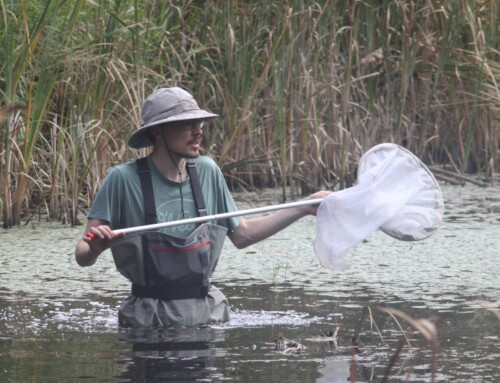
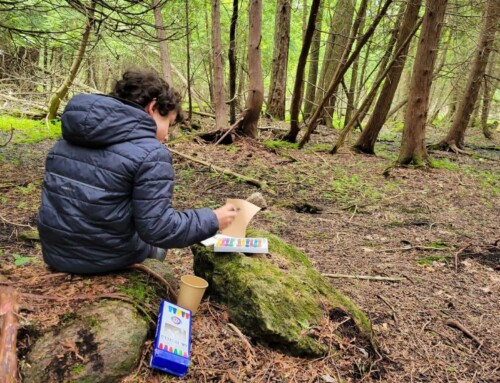
If you have any questions about the ongoing conservation work at A Rocha Canada, or if you would like to also participate in this work, please use the website to contact us.